I know that it’s been ages since I’ve posted here, but I’ve been super busy with some other great Jewish monster hunting projects. I’m hoping to get back to the blog, but in the meantime I thought I’d share some of these projects.
First, Jewish Monster and Magic Trading Cards!
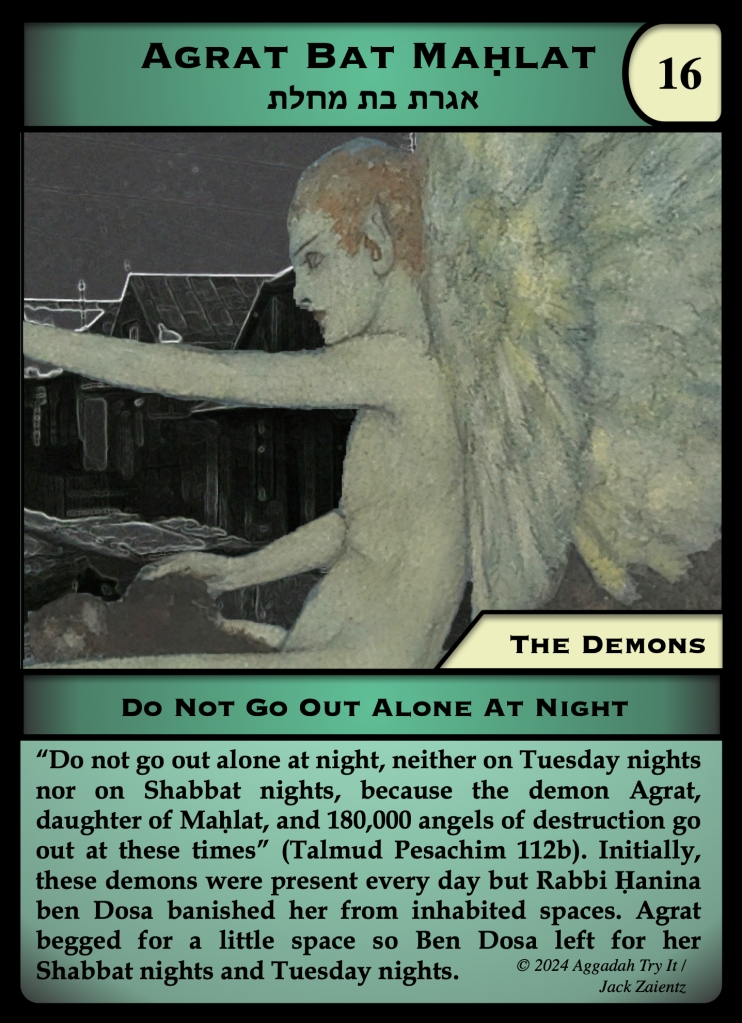
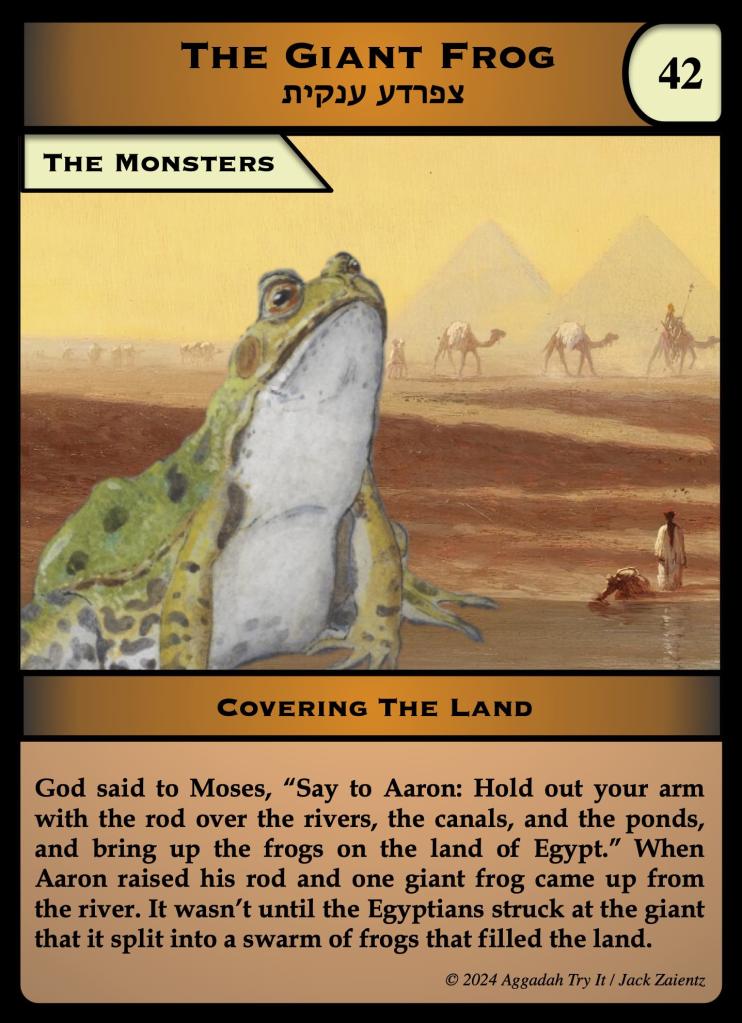
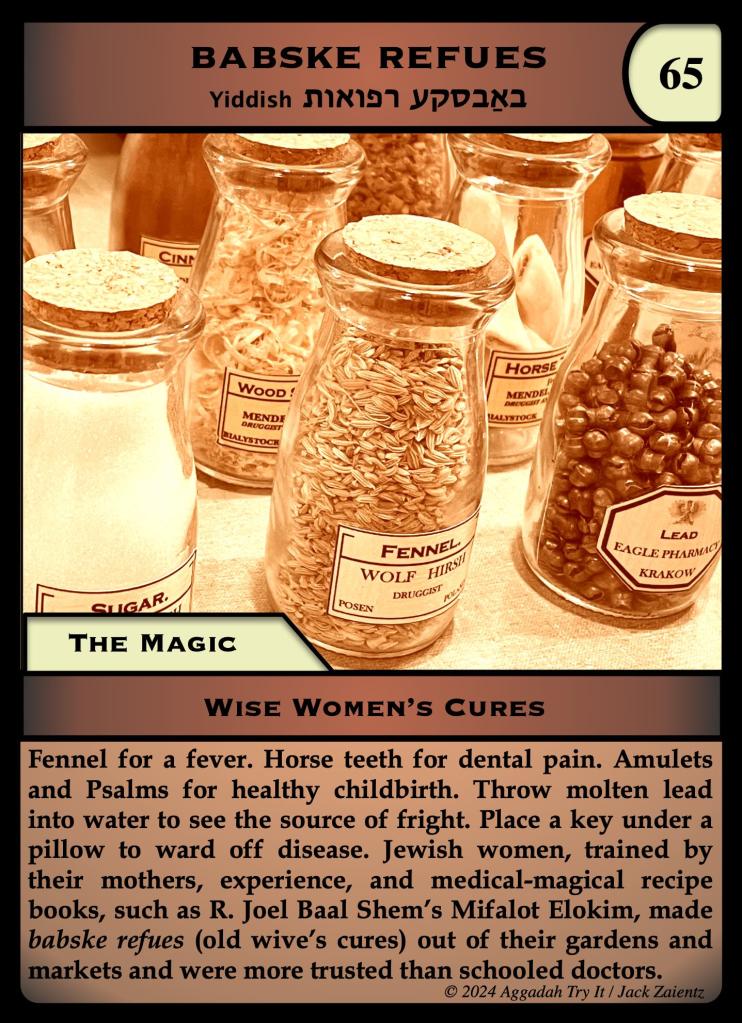
Working with Madness Heart Press / Aggadah Try It, I’ve been busy developing a set of Jewish Magic and Monster Trading Cards that showcases the wildness and richness of Jewish lore. The cards feature a beautiful combination of my original graphics, collage art, and photographs as well as vintage illustrations and public domain images.
Between the two decks, there are 108 individual cards that tell the stories of angels and shedim (demons); giants and sea monsters; rabbinic grimoires and amulets; Jewish women’s home magic rituals and ingredients; and a long list of amazing characters including Yosef Sheyda (Joe the Demon), demon friend to the Rabbis of the Talmud; the immortal Seraḥ Bat Asher, adopted granddaughter our Jacob the Patriarch who helped Moses free the Hebrews; Joseph Della Reina, a devout rabbi who was corrupted by Lilith and Samael; and Ornais, a gender-fluid vampiric demon. They draw on Torah, Talmud and post Talmudic Jewish commentary, the Jewish apocrypha, medieval traveler’s tales, Kabbalah texts, early modern legends and diaries, and modern Jewish broadsheets, news reports, and ethnographies. The cards draw on original source documents wherever possible and leverage the best of modern religious writing and academic research.
Cards are getting amazing support so far! Check out the amazing crew that have seen pre-production versions!
The two decks of cards, and a lot of cool extras are being initially sold via a Kickstarter campaign that launches on October 28, 2024! If you’re interested, check it out! If you haven’t supported a Kickstarter campaign, it’s easy! You pick the pledge you’re interested in, e.g., pick the Aleph Deck, both decks, or one of the higher reward tiers, add in an extra if one looks good (see Monster Hunting Kits, below). Assuming enough folks do that to fund the campaign, which is pretty much guaranteed, funds will be collected on December 1st, we send the card order to the printer, and everyone has cards and extras by mid-February. (If you go with the Chanukkah tier I promise to get Chanukkah cards in your hands in time for Chanukkah). If you are a Jewish teacher or active in a Jewish organization, definitely check out the Class/Club tier which comes with an hour Zoom class!
Check them out at my Ko-Fi shop!
Second, the Wayward Children podcast!
Starting about a year ago John Baltisberger and I have co-hosted the podcast “Wayward Children: Jewish Monsters, Magic, and the Stories We Tell!” The goal of Wayward Children is talk about Jewish monsters and magic from a very Jewish perspective. Wayward Children is the English translation of Banimim Shovavim, half-demons, one of my favorite bits of Jewish lore (and one of the trading cards!) I bring more of a research perspective, John brings more of a fiction writers perspective, but we’re both very invested in our Judaism and go deep more often than not. Recent episodes have covered Lilith, Jewish curses, the Giant Wars, dybbuks, and an amazing interview talking about Chassidic magic. The podcast can found, for free, at most podcast download sites including https://waywardchildren.buzzsprout.com. It’s a whole lot of fun. I hope you enjoy it.
This is us! I’m the guy in the hat. John’s the surly dude in with ass’s jawbone.
Third, Jewish Monster Hunting Kits!
Beyond our world of form and substance, but nearer than heaven, is a middle world full of magic and danger. In it, creatures who change shape hide in the shadows to torment and trick us and where an iron nail, some salt, a bunch of rue can get us home safely. You’d better be ready!
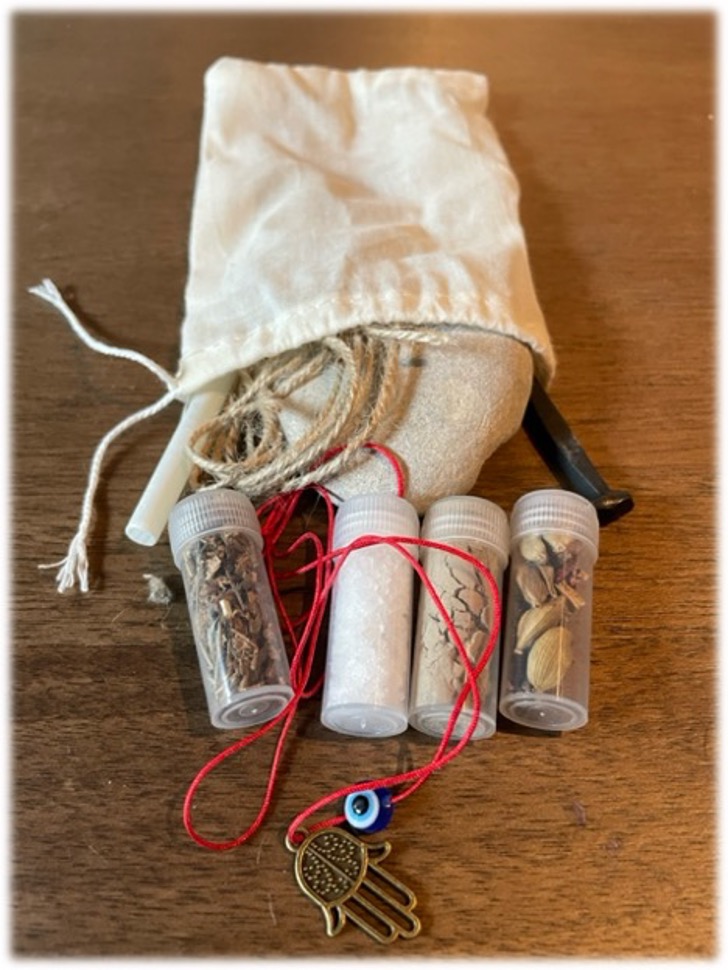
My Jewish monster hunting kits! Perfect for dealing with Shedim and Estries!
This kit has what it takes to protect you from shedim (demons), estries (female vampires), ghosts, and the evil eye (jealous looks that can harm), so you can be safe on the go:
Hardwood ash. It will help you see where shedim (demons) walk. Sprinkle it around your bed at night. Just to be sure.
Besamim (Havdalah spices). Shedim hate its holy scent.
An iron nail. Repels shedim when you’re away from home.
Salt. Sprinkle salt in the corners of your room to repel shedim.
Rue. An herb that can protects you from the evil eye.
Hamsa. A symbol of a hand that blocks the evil eye.
Twine. Tying up an estrie’s hair takes away her power.
A stone. Killing an estrie isn’t hard, but they won’t stay dead unless you bury them with a rock in their mouth. You can also place the stone on a gravestone to keep the ghost in the grave anchored to its resting spot.
This kit is a small sampling of what a Jew, whether Sephardic, Ashkenazi, or Mizrachi, might carry or have on hand. Also included with the kit is a short zine which provides additional background on the elements of the kit, Jewish magic and monster lore, and points to additional resources to start learning about this fascinating part of Jewish life.
The kit comes with a glossy postcard describing each of the items in the kit. Also at my Ko-Fi store.
Fourth, Articles and Teaching!
Over the last couple of years, I’ve had the opportunity to write two articles for the Jewish Review of Books website. The first, “As The Story Goes: Hanukkah Spears, Cheese, and Goblins” talks about Hanukkah stories from Jewish lore and the second “Total Eclipse of the Bracha” is about how whether or not we say a bracha over an eclipse is based on whether or not we, as many Jews historically do, believe a bracha is a bad omen.
This week I have a third article coming out that I’m really excited about. Rabbi Danya Ruttenberg invited me to write a guest post titled “Let’s Talk about Angels, Shedim, and Giants” for her wonderful Life is a Sacred Text substack/blog. In this article, I talk about my experiences studying Jewish monsters and magic and why I think it’s important to reintroduce them back into Jewish discourse and spiritual practice. We’ve lost a lot by sweeping them into the corners. Check it out and see if you agree!
I’ve also done some teaching and storytelling at Temple Beth Emeth and Congregation Beth Israel in Ann Arbor, Michigan, and at Temple Beth Tikvah in Fullerton, California. If you’ve got a synagogue or group that would like me to come and visit, let me know!
Jack telling Jewish scary stories at Temple Beth Tikvah in Fullerton, California*
Finally, Social Media. I’m really active on social media under the name @AdneSadeh on X/Twitter, Bluesky, and as Jewish Monster Hunting on Instagram.
This is a long way of saying that while the blog has been quiet, I’ve been super busy with Jewish monster hunting activities. I miss the blog format, though and hope to get back to it someday.
*The cool t-shirt I’m wearing in the picture is of a seraph, a flaming fiery serpent that God sent to plague the Hebrews during the Exodus. The shirt was made by John and my buddy Marti Fuerst, who’s done a bunch of great Jewish magic and monster shirts and also did the Wayward Children podcast logo. She’s also the Wayward Children podcast archivist! She maintains a GoodReads list of all the books we’ve referenced. Check out her Jewish art and buy her shirts at MartiFuerst.com. I’ve five of them and wear them non-stop!
My Jewish monster hunting gear boxes were ready to go. But what was in them?
Last night was Shabbat, one of the two nights (along with Tuesday), that Agrat bat Maḥlat, one of the queens of the shedim (aka demons), haunts the air with her train of eighteen myriads of messengers of destruction (1). With Havadalh behind me, I was out on patrol driving around in my beloved Honda Element loaded with all my Jewish monster hunting gear….ready for Agrat or whatever else might happen.
Actually I was home reading. Like usual. But my Jewish monster hunting gear boxes were ready to go. But what was in them?
Before I list out what I’ve collected so far, I want to point out that my gear collection is authentic if a bit eclectic. It draws draws from a range of Jewish sources and time periods, includes Ashkenazi, Sephardic, and Misrachi elements, mixes rabbinic and kabbalistic elements with elements from Jewish women’s segulot and prekante (Hebrew and Ladino terms for household charms) and Jewish medical lore. My goal is was to develop the gear that a modern ba’al shem (wonder rabbi) (2) or babske refuah (wise woman) (3) might have on hand. Just in case Agrat bat Maḥlat shows up or, more practically, I get to teach a class.
Part 1. Here’s a list of my original Jewish monster hunting gear.
In some cases I provide links on where to buy your own. These are just examples. I don’t have any financial relationship with the vendors. Please buy from small local business if you can.
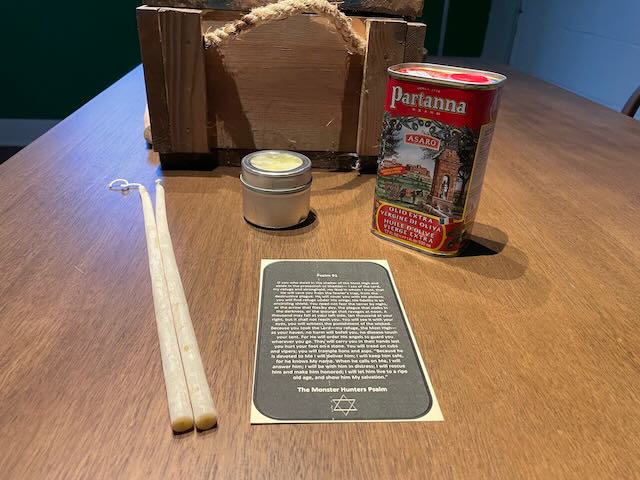
Salt. Shedim and ghosts don’t like salt and it can be used as a barrier.
Iron pins. Traditionally, a Jew would wear an iron pin when traveling. Giving how much metal we carry with us these days wearing an iron pin isn’t really necessary..but it can’t hurt either. (Creating-Unkamen @ Etsy)
Kero masa wood. According to the Talmud (Pesachim 111b), kero masa is harmful to shedim (4). Kero masa is sorbus, also known as the Serviceberry Tree. This stick is Latvian rowan wood, a kind of sorbus. (TrueWilderness @ Etsy)
Shofar. Shedim can be scared by loud noises..so blowing a shofar is a go-to move. This is a cheap one I picked up on my one trip to Israel. Someday I’ll get a better one and learn to blow it properly. (Any local or online Judaica vendor)
A card with text of Psalm 91, the Monster Hunter’s Psalm. Need to memorize this one or keep it handy.
Ketoret Gear
Amber incense. Shedim hate strong smells. Incense points back to the priestly koteret incense (Scents of Earth or a lot of Etsy sellers)
Wooden pipe (for regular tobacco). Shedim hate strong smells but, more importantly, there is a tradition of rabbi’s smoking pipes with the mysitical intention of invoking the powers of the temple incense (koteret) to banish demons and plagues. (Any pipe will do. I like this walnut one. HousewarmingUA)
Amulets
Shmirah amulet (the big one with the upturned hand). Amulet to protect mother and baby from Lilith the demon queen. Amulets like this are hung in baby’s rooms and hospital delivery rooms. (Eichlers)
Anti-COVID amulet. I picked this up on eBay from an Israeli seller. No idea who the scribe was or if it’s intended for the Charedi community or the tourist trade. Probably the latter, but it’s still cool. (eBay)
Hamsa. Anti-evil eye charm. This one’s a cheap key chain. I have a couple of other ones but no really nice ones. (Nice vintage ones show up on eBay regularly. I’ll get one eventually.)
Amulet Making Kit
A box of amulet making gear, including kosher torah ink, 5 kosher mezuzah klafs, 2 kosher quills, a metal scribal blade (for scratching out errors) and some replacement blades. – An experienced Ba’al Shem makes their own amulets. (A sofer supply store such as HaSofer)
Estrie Gear
String. For tying up an estries hair. They lose their power when their hair is tied up.
Rocks. Killing an estrie isn’t hard, but getting them to stay dead is. You nead to bury them with rocks in their mouths.
Salt. If you hurt an estrie you can heal it by giving it your bread and salt.
Entrenching Tool
Army surplus shovel / entrenching tool. For digging a trench over a grave, in order to become willingly possessed by with an Ibbur (eBay)
Books
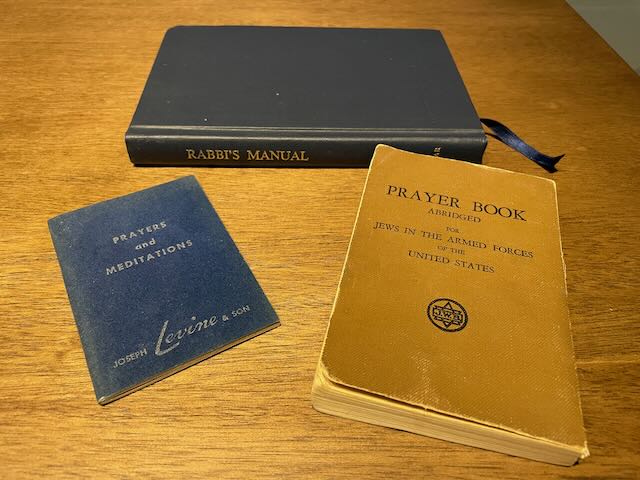
Prayer books. Got to be ready for anything. I carry a vintage US Army Jewish prayerbook, a rabbi’s manual, and small “Prayers and Meditations” for funeral usage. Not in this picture, but I also have a couple of tahara manuals (preparation of the dead for burial).
Shabbat kit
Shabbat kit. Portable Shabbat candle holders and matches case
Havadala kit. Candle and candlholder, a collapsable wine glass (not pictured), and besamim. All of which have anti-demon properties, the besamim in particular.
Medical Kit
I usually have some of my medical kit in my gear box as well. I’ll document my medical gear in another post, but I usually have lead and cloves on hand in case of the evil eye.
Notes and References
(1)Peasachim 112B.15 “With regard to the instruction: Do not go out alone at night, the Gemara states that this is as it was taught in a baraita: One should not go out alone at night, neither on Tuesday nights nor on Shabbat nights, i.e., Friday nights, becausethe demon Agrat, daughter of Maḥalat, she and 180,000 angels of destruction go out at these times. And as each and every one of them has permission to destroy by itself, they are all the more dangerous when they go forth together. The Gemara states: Initially, these demons were present every day. Once Agrat, daughter of Maḥalat, met Rabbi Ḥanina ben Dosa and said to him: Had they not announced about you in the Heavens: Be careful of Ḥanina and his Torah, I would have placed you in danger. He said to her: If I am considered important in Heaven, I decree upon you that you should never travel through inhabited places. She said to him: I beg you, leave me a little space. He left for her Shabbat nights and Tuesday nights.And furthermore, once Agrat, daughter of Maḥalat met Abaye and said to him: Had they not announced about you in the Heavens: Be careful of Naḥmani, Abaye, and his Torah, I would have placed you in danger. He said to her: If I am considered important in Heaven, I decree upon you that you should never pass through inhabited places. The Gemara asks: But we see that, notwithstanding these anecdotes, demons do pass through inhabited areas.”
(2) Ba’al Shem were, and in some places still are, Jewish healers, exorcists, and amulet makers. While not “monster hunter’s” per se, they are pretty darn close. See YIVO’s article Ba’al Shem, for an overview. Ba’al Shem could be formally elite rabbi’s or folks who pieced their knowledge together as they could. But they were guys. Ba’al shem is an Ashkenazi term, but there were Sephardic and Mizrachi equivalents.
(3) Babske Refues were, and still are, older women well versed in traditional home healing lore including exorcisms and protection from the evil eye. See YIVO’s article on Health and Healing. Again, I’m using a Yiddish term but am absolutely including Sephardic and Mizrachi equivalents.
(4) The text of Pesachim 111b reads “And any tree whose wood is hard, its shadow is dangerous, except for the tree called kero masa. Although its wood is hard, its shadow is not dangerous, as the demon said to her son: Leave the kero masa tree alone, as it was that tree that killed your father. And the tree later killed the son too. The kero masa tree is harmful to demon” Despite this claim, I’m not aware of any Jewish tradition that involves the practical use of kero masa to defend against demons. I figure it doesn’t hurt to keep a bit around, just in case.
We Jews are people of the book, a nation of priests, with a strong distaste for violence and warfare. The Mishna, citing Isaiah, states “they [weapons] cannot be seen as anything other than reprehensible and in the future they will be eliminated, as it is written: “And they shall beat their swords into plowshares and their spears into pruning hooks; nation will not raise sword against nation, neither will they learn war anymore” (1) But we Jews have, and will continue to, pick up swords (or whatever weapon comes to hand) to fight when necessary. And some of those swords are miraculous. Here are the stories of four of them from the Biblical (and just post-Biblical) period. In future blog posts I’ll pick up the story of swords in later Jewish magic and the story of angel with swords.
Methuselah’s Demon Sword
Those first generations, between Adam and Noah, were constantly beleaguered by demons. According to one Jewish tradition (2) Adam, in his despair after Cain’s murder of Abel, was estranged from Eve for 130 years. Eventually they reconciled and had Seth, but during the time of the estrangement Adam was seduced by Lilith (3) and fathered myriad shedim (demons) and lilin (succubi, daughters of Lilith) (4). These shedim naturally made a nuisance of themselves, causing all sorts of trouble for humanity both attacking them physically and corrupting them morally. Eventually God had enough. Methuselah, son of Enoch (5) and a descendant of Seth, was the tzaddik (righteous man) of his generation. God gave him a magic sword, inscribed with one of God’s names (6), and Methuselah used it to kill 900,000 shedim. Eventually one of the lead demons begged Methuselah for mercy. Methuselah spared the remaining shedim, who then hid away from humanity in the wastelands, mountains, and oceans.
[eventually] The Holy Blessed One gave over the Wicked Ones to Methuselah the righteous, who wrote the explicit name of God upon his sword and slew900,000 in a single moment, until Agrimas [demon king], the first born of the First Man [Adam], came to him. So he stood before Methuselah and he appealed to him to receive him. And he (Agrimas) wrote and gave to him the names of the shedim and lilin and [in turn] they (the sheidim) gave them (humans) iron to restrain [spirits] and they gave their letters in protection, so the remnant (the surviving spirits) concealed themselves in the remotest mountains and in the depths of the ocean Margoliot, Malachei Elyon 204, Geoff Dennis translation (7)
Ilan Young’s “Ancient Israelite warrior with a khopesh sword” (8)
Eventually, Methuselah’s sword was handed down to Noah, to Shem, and then Abraham, who used it during the giant wars. (9) Abraham then passed it down to Isaac, Esau, and Jacob. It’s not clear what happened to sword after Jacob owned it. (10)
Some later commentary portrays Methuselah’s sword as a spiritual weapon, not a pointy-stabby thing (11). Which makes sense. Even with a magic sword, killing 900,000 demons would be a bit of a project. So maybe it was more of a spiritual range weapon. Calling it a spiritual sword also links it with the Sword of Moses magic spellbook tradition, where the spells are thought of as the “sword of the tongue.” (12)
Also, when we talk about Methuselah’s sword, we need to remember that Methuselah lived in the early Bronze age. There were no long steel swords. The sword would likely have been a long bronze dagger or an early variation on the sickle-shaped khopesh sword, which evolved from axes around 2500 BCE. (13, and see Ilan Young’s illustration above). The website BiblicalArtifacts.com hasan example of Bronze Age sword, but note that it’s only 18 inches long. Definitely dagger or short sword territory. The BiblicalArtifact’s sword is currently for sale, if you’ve got an extra $1,500 kicking around.
The Glittering Sword of Kenaz
In the Torah, Kenaz was a minor character, the younger brother of Caleb (who was one of the 12 spies sent by Moses into Canaan). In the book Biblical Antiquities (14) attributed to Pseudo-Philo (15), however, Kenaz was much more important, portrayed as the first judge of Israel after Joshua and the wielder of a magic sword. This popular version of Kenaz integrated fragments of other biblical stories (16) and served as a basis for later storytelling including Gerald Friedlander and George Hood’s lovely 1920 “The Jewish Fairy Book” (17).
The Sword of Kenaz, illustrated by George W. Hood in Gerald Friedlander’s “The Jewish Fairy Book”
According to Pseudo-Philo, Kenaz used his glittering sword during a battle with the Amorites. Despite leading previously successful battles, Kenaz was insulted by his soldiers who thought that he was sending them off to battle while he stayed behind in safety. To show his soldiers that this wasn’t true, Kenaz arranged an early attack on the Amorites by just a small group of his most loyal soldiers and himself. He told his soldiers that he would attack the enemy himself and only to come to his aid if he blew his horn. As Friedlander tells it…
At sunset Kenaz left his tent and went away at the head of his three hundred horsemen. In his hand he held his magic sword. All who saw it trembled like a leaf when moved by the wind. …Away he went. It was almost night and he turned his heart and thoughts to God, praying: “O Lord! God of our fathers! I beseech Thee, do a miracle now. Let me, Thy servant, be chosen to defeat the enemy. With Thy help one man can defeat a million. … Let it come to pass when I draw my sword that it shall glitter and send forth sparks in the eyes of the Amorites who refuse to worship Thee as the only true God.
The spirit of the Lord was like armor around his body. Without fear he went into the camp of the enemy and began to smite them. As soon as they saw his sword they trembled and fell on their faces to the ground. To help him God sent two invisible angels who went before him. One, named Gethel, smote the Amorites with blindness so that they began to kill one another, thinking that they were smiting their enemies. The other angel Zernel bare up the arms of Kenaz, for his strength was beginning to fail him. He smote forty-five thousand men and they themselves smote about the same number among themselves. From, “The Magic Sword of Kenaz” in “The Jewish Fairy Book” (16)
Much like Methuselah’s sword, Kenaz’ sword channeled God’s power to kill a large number of foes and to protect him from harm. Kenaz’ sword, though, was only used to kill humans, not demons. It also had one other property that only showed itself at the end of battle. The sword wouldn’t let Kenaz put it down. Kenaz, in his desperation to let go of the blade, asked an escaping Amorite how to get the sword to release him. The Amorite told Kenaz that he would need to kill one of his own soldiers and cover his hand in blood. Kenaz took the advice, but killed the Amorite instead, figuring that the sword wanted blood but didn’t care whose. Kenaz was right.
Whew. Pretty dark.
It’s not clear where Kenaz’ sword came from, but it was famous enough that the Amorites had heard of it. But it was also new enough to Kenaz that he didn’t know all it’s properties. So… was it Methsuleah’s sword, handed down for 1000 years and given to Kenaz when he became a judge? Or is it a new sword with new powers taken from one nation that the Joshua had conquered? Pseudo-Philo didn’t say. (Also, despite what George Hood’s lovely illustration shows, it was much too early for it to be an iron long sword.)
MONSTER HUNTER PRO TIPS
1. Don’t have Methuselah’s sword handy? Make one. It’s just a pointy sharp amulet. Ok, so your average amulet maker wont have the kavanah (mystical intention) that God has, but hey…are you really going to fight 900,000 demons at once?
2. Getting new glittering magic items is exciting. Make sure you know how to use them.
There is none like it–King David’s Sword
David, who would become king of Israel after Saul, is legendary for slaying Goliath, the Philistine giant. David, the shepherd, is young and handsome, fighting in the name of God. Goliath is large and hulking, the pride of the pagan Philistine army. David wears no armor and doesn’t carry a sword. Goliath is heavily armed and armored. The fight is over almost before it begins….David picks up five stones and uses a sling to thwack one into Goliath’s forehead just under his great bronze helmet. Goliath falls dead. David then grabs Goliath’s heavy sword and beheads him with it. (18)
David Slays Goliath, Gustave Dore (19)
According to Midrash Golyat (20), Goliath’s sword has miraculous powers but it’s not clear what those powers are. It’s possible that they have to do with changing the size or weight of the blade to match the size of the owner. Rashi notes that the much smaller David was only able to try on King Saul’s armor because it miraculously shrank to fit him. (21, 22) It’s possible that the powers could have increased the sword’s strength. There is a similar legend that the five pebbles “came to David of their own accord, and when he touched them, they all turned into one pebble. The five pebbles stood for God, the three Patriarchs, and Aaron.” (23) Or maybe something else entirely.
One thing is for certain, the sword was highly prized. Ahimelech the priest stored the sword in the temple with the priests ephod. This is a rather singular place to stash it. The ephod was a garment of the high priest and was associated with divination. The ephod was worn under the priest’s breastplate, which held the Urim and Thummim divination stones (24). Storing Goliath’s sword with the ephod puts it in holy and powerful company.
The priest [Ahimelech] said, “There is the sword of Goliath the Philistine whom you slew in the valley of Elah; it is over there, wrapped in a cloth, behind the ephod. If you want to take that one, take it, for there is none here but that one.” David replied, “There is none like it; give it to me.” I Samuel 21.9 (25)
I mentioned above that Abraham carried Methuselah’s sword in the first giant wars. David carried Goliath’s sword into the third giant war (26) where David and his men fought the last four remaining giants from the last giant city. (Moses and Joshua fought in the second giant wars, with Moses legendarily killing the giant Og, King of Bashan. (27))
Again war broke out between the Philistines and Israel, and David and the men with him went down and fought the Philistines; David grew weary, and Ishbi-benob tried to kill David.—He was a descendant of the Raphah; his bronze spear weighed three hundred shekels and he wore new armor. 2 Samuel 21:15 (28)
After David’s reign, there is no more mention of Goliath’s sword.
Sword of Judith
Ok, I have to fess up. I’m not aware of any Jewish tradition suggesting that Judith’s sword is miraculous (29). Which makes this an anti-climactic end to a blog post on Jewish magic swords. I think it’s warranted, though. In Judaism, the Book of Judith is Chanukkah’s answer to Purim’s story of Esther. It’s a late, non-canonical, story of a Jewish heroine taking decisive action to fend off cruel and lascivious kings, overturn harsh edicts, and save her people. And, like Megillat Esther, it’s a story where God’s actions are more implied than stated. Unlike Esther, however, it all centers around a sword.
Here’s a short version of the story from the medieval text Kol Bo (30)
Women are obligated to light Hanukkah candles, for they too were included in the miracle. This means that the enemies came to destroy everyone, men, women, and children, and there are those who say that the great miracle occurred through a woman. Her name was Judith, as the story goes, and she was the daughter of Yochanan, the high priest. She was extremely beautiful, and the Greek king wanted her to lay with him. She fed him a dish of cheese to make him thirsty, so that he would drink a great deal and became drunk, and recline and fall asleep. And it happened just that way, and once he was asleep, she took his sword and cut off his head. She brought his head to Jerusalem, and when the armies saw that their leader had been killed, they fled. For this reason, we have the custom of eating a cheese dish on Hanukkah.
There’s a lot more to the story, but that’s gist of it. What I find striking is how much the story echos the story of David and Goliath (31, 32). Underdog hero(ine) wants to avoid a war, wins against all odds, and chops the bad guy’s head off…with the enemies magic sword? Which got me thinking. A devout, brave, and wily Judith gets the advantage of King Holofernes, grabs his sword, and … maybe God was in the downstroke and not just in the inspiration. Maybe it wasn’t a magic sword when she picked it up….but maybe it was when she put it down.
Hanukkah menorah depicting Judith holding King Holofernes head and sword, Italy, 19th century, The Jewish Museum, NY. (33)
Notes and References
(1)Mishna Shabbat 63a:3-5 (Sefira.org), commenting on Isaiah 2:4. Rabbi David Krishef of Congregation Ahavas Israel has a great Sefaria source sheet on “The Use of Weapons in Jewish Sources.” (2) Babylonian Talmud, Tractate Eiruvin 18b (Sefaria.org). “Rabbi Yirmeya ben Elazar said: All those years during which Adam was ostracized for the sin involving the Tree of Knowledge, he bore spirits, demons, and female demons, as it is stated: “And Adam lived a hundred and thirty years, and begot a son in his own likeness, after his image, and called his name Seth” (Genesis 5:3). By inference, until now, the age of one hundred thirty, he did not bear after his image, but rather bore other creatures.” (3) Ok. This gets wild. According to the Jewish tradition, Lilith was Adam’s first wife and Eve was his second. Lilith rejected Adam because Adam refused to see her as an equal, ran away, got chased down by three angels, claimed that she was now a child-murdering demon and cut a deal that she would not be forced to return to Adam in exchange for not-murdering Adam’s descendants if they hung amulets with the names of angels in the baby’s rooms. The most famous version of this is written in the Alphabet of Ben Sirah (Jewish Women’s Archive) and it is still an active tradition in parts of the traditional Jewish community. You can buy anti-Lilith segulah (charms/amulets) at some traditional Jewish bookstores including Eichlers. In some liberal Jewish communities, Lilith has become a feminist icon, celebrated for her insistence on equality (hence the founding of Lilith magazine.) (4) This is just one of many Jewish traditions on the origins of demons, two other major ones being that they were created by God on the eve of the first Shabbat and that they are the evil spirits of the Nephilim, half-breed giant children of angels and human women. (5) Enoch is a major character in Second Temple Jewish writings, tied to an entirely different story about the origins of demons. Check out the Book of Enoch, Book of Jubilees and academic writings from by Andri Orlov, Annette Y. Reed’s “Demons, Angels, and Writing in Ancient Judaism”, and Loren Stuckenbruck‘ “The Myth of Rebellious Angels: Studies in Second Temple Judaism and New Testament Texts” (6) The sword is an amulet and part of the long tradition of Jewish amulets with a name of God or the name of an angel (7) Rabbi Geoff Dennis is the author of The Encyclopedia of Jewish Myth, Magic, and Mysticism, and the Jewish Myth, Magic, and Mysticism blog. (8) Ilan Young’s “Ancient Israelite warrior with a khopesh sword” Used with permission. Check out his online gallery and Redbubble shop (9) Yes. The Giant Wars. From Genesis 14 “Chedorlaomer and the kings who were with him came and defeated the Rephaim at Ashteroth-karnaim, the Zuzim at Ham, the Emim at Shaveh-kiriathaim, and the Horites in their hill country of Seir as far as Elparan, which is by the wilderness…. A fugitive brought the news to Abram the Hebrew, who was dwelling at the terebinths of Mamre the Amorite, kinsman of Eshkol and Aner, these being Abram’s allies. When Abram heard that his kinsman had been taken captive, he mustered his retainers, born into his household, numbering three hundred and eighteen, and went in pursuit as far as Dan” Rephaim, Zuzim and Emim are all tribes of giants, descendants of the Nephalim. The fugitive that runs to Abram is Og, giant king of Bashan. (10) Louis Ginzberg, in “Legends of the Jews” notes “Yalkut David on Genesis 12.1 who cites Sifte Kohen as the authority for the statement that Abraham came in possession of this sword, with which he conquered the kings, and further that Esau thus received it, as heirloom, from Isaac since he was the first born. This sword passed to Jacob when he purchased the birth-right.”) (11)The Chabad.com article on Methuselah makes this point, quoting Midrash Agada, Genesis 5:25. Yalkut Re’uveni, s.v. Bechorah, 2: “Hence his name Metushelach, a conglomerate of Met-Ushelach, meaning “death and dispatch,” a reference to his ability to vanquish the forces of evil.” However, the Arizal (Sha’ar HaPesukim, Parashat Bereishit) points to the verse in Chronicles II (23:10), “וְאִ֣ישׁ שִׁלְח֣וֹ בְיָד֗וֹ” – “Each man with his weapons (“shilcho”) at the ready,” to interpret “Metu-shelach” as a name associated with the possession of a (spiritual) sword of sorts.” (12) The Sword of Moses is a collection of spells that is at 13th or 14th century CE, but could be as early as 4th century C.E. See Yuval Harari’s “The Sword of Moses (Harba de-Moshe): A New Translation and Introduction” or the older Moses Gaster translation. (13) For more on the Khopesh, see Wikipedia (14) Biblical Antiquities was written (probably) between the first and second century CE, shortly before the destruction of the Jersulaem and the Temple in CE. The website Sacred Text has a translation. The story of Kenaz and the sword are in chapter 26. (15) Just to be clear, “Pseudo-Philo” isn’t really a name. The book author is unknown. At one point the author was thought to be Philo of Alexandria but it was later pretty solidly decided that it wasn’t. Hence the cool kids started the author “Pseudo-Philo” because “that unknown writer that’s kinda like Philo but isn’t” is kinda wordy. (16) Nathaniel Vette’s paper “Kenaz: A figure created out of the scriptures?” from provides a nice overview of how Pseudo-Philo’s version of Kenaz is built on fragments of other Jewish writings. Not just proof-texts, but bits of narrative. (17) Archive.org has a lovely scan of the illustrated 1920 edition of “The Jewish Fairy Book.” The scanned images are large, though, so reading the Wikisource text version is easier. (18) David beheading Goliath with his own sword. I Samuel 21.17 at Sefaria.org (19)“David Slays Goliath” by Gustave Dore. (Wikimedia.com. Public domain) (20) The claim that Midrash Golyat says the sword is magical was made by Jewish Encyclopedia. (21) Rashi on I Samuel 17:38 from Sefaria.org “They [Saul’s armor] changed and became David’s size, since he had been anointed with the anointing oil, although they belonged to Saul who was taller than all of the other people, from his shoulder and upward. And when Saul noted this, he cast an [evil eye] toward him, and David realized it.” (22) Is David short or tall and why it matters? Avinoam Sharon wrote a detailed discussion of the theological implications of David’s height in “Height Theology: The Theological use of Lexical Ambiguity in the David and Goliath Story” (23)Louis Ginzberg, Legends of Jews. (24) Rashi describes the Urim and Thummim, (Sefaria.org) saying “This was an inscription of the Proper Name of God which was placed between the folds (i. e. the two pieces forming the front and back) of the breast-plate through which it (the breast-plate) made its statements clear (lit., illuminated its words; מאיר from אור, light, this being an allusion to the אורים) and its promises true (מתמם from the root תמם, an allusion to תמים) (Yoma 73b). In the second Temple there was certainly the breast-plate (although other objects employed in the Temple Service were missing) for it was impossible that the High Priest should have lacked a garment, but that Divine Name was not within it. It was on account of the inscription which constituted the Urim and Thummim and which enabled it to give decisions that it was called “judgment”, as it is said, “And he shall enquire for him by the judgment of the Urim” (Numbers 27:21). (25) David collecting the sword of Goliath from Ahimelech the priest I Samuel 21.10 at Sefaria.org (26) For a good scholarly essay on David’s wars, including the battles with the giants, see Moshe Garsiel’s “David’s Elite Warriors and Their Exploits in the Books of Samuel and Chronicles” (Academia.edu) (27) Moses fighting with Og, King of Bashan is one of my favorite pieces of Jewish lore. For a good run down on it see the “They might Be Giants” the ParshaNut D’var Torah for Parshat Dvarim. If you happen to have JSTOR access an even better overview is written up in “The Story of a Giant Story: The Winding Way of Og King of Bashan in the Jewish Haggadic Tradition” by Admiel Kosman. (JSTOR) (28)The Raphah were related to the Rephaim, a race of giants. This was David’s last battle and possibly last battle of Goliath’s sword. After this David was considered to valuable to the nation to be allowed to fight. See 2 Samuel 21:15 (Sefaria.org) (29) And I really tried. For example, Deborah Levine Gera’s wonderful article “Shorter Medieval Hebrew Tales of Judith” summarizes a wide variety of Jewish midrash about Judith. Not one magic sword. Rats. (30) Judith, Chanukkah, and Cheese in Kol Bo (Sefaria.org). For the full version, see ST-Talka.org’s Book of Judith translation. (31) FWIW, I noticed this myself but pretty much everyone makes this connection. It’s a well documented part of Judith lore and art. For example, “Stories in Art: Comparing David & Goliath and Judith & Holofernes” notes that “Paintings of David illustrate his heroism and bravery, and paintings of Judith should show the same traits. Instead, paintings of Judith often depict her as weak, passive and barely able to wield a sword, while emphasizing her beauty and sexuality.” (32) The story of Judith is also very similar to the story of Jael, in Judges 4:18 (Sefaria.org). Jael kills a cruel king Sisera who fell asleep in her tent with a tent peg and a mallet. For more on Jael, see the Jewish Women’s Archive article. (33) The image of the menorah with Judith holding a sword comes from Deborah Levine Gera’s article “Judith: Chanukkah Heroine?” in the TheTorah.com. Reproductions a different Judith menorah are available on Ebay right now, if you’ve got a some cash to burn.
If you’re going to be ready to deal with demons and dybbuks, you need your gear. Right? Right! Last year I got to teach a class on Jewish monsters for the high school students at Temple Beth Emeth in Ann Arbor, Michigan. To make the class more fun I built some gear boxes and filled them with everything a Jewish monster hunter needs.
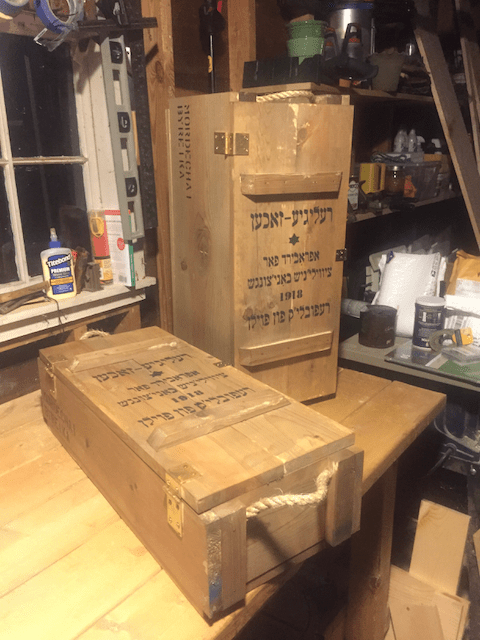
I’m a big fan of Larry Coreia’s urban fantasy “Monster Hunter International.” One of the minor characters is a Jewish monster hunter named Mordechai Byreika, who was born in Poland and died during WWII. I had fun imaging that these were his gear boxes. I modeled them after vintage ammunition boxes. The front stencil reads, in Yiddish, “Religious Items. For Non-military use. Republic of Poland 1918.”
The first box is loaded with gear including a Jewish exorcism kit, hardwood ash for seeing demons, gear for dealing with estries (Jewish vampires), anti-Lilith amulets, and bunch of other great stuff. I’ll detail it in later blog posts.
The other box was loaded with books. Obviously. An old family Tanach, Sefer Yetzirah and Sefer HaRazim, the Sword of Moses and the Books of Enoch and a bunch more. Again, I’ll detail them all in later posts.











 Jewish Monster Hunting
